January – March 2024
In this stage, a preliminary experimental design was developed, which included the establishment of the monitoring steps for lipid accumulation, the cultivation time, and incubation conditions, as well as the selection of specific media for inducing lipid accumulation. The strain Yarrowia lipolytica ACA-DC 50109 was included in the Department’s collection, and its preliminary morphological and physiological characteristics were determined. Using the Biolog YT MicroPlates system, the assimilation / oxidation profile of different available carbon sources was established.
The necessary documents for the contracting phase were prepared, along with the documentation and procedures required to initiate the procurement of consumables and equipment. In addition, the development of a selective bibliography was initiated, comprising 20 relevant references on the Adaptive Laboratory Evolution (ALE) technique and associated analyses (biochemical techniques used for monitoring the stages required for oleaginous growth phases in Y. lipolytica on ALE-specific media). This list is currently being finalized, requiring both the expertise of the project director and the analysis of the most recent publications in the field.
April – June 2024

The first group meeting of the project team was organized under the coordination of Prof. Dr. George Aggelis
The optimization of the ALE culture medium and working conditions for small-scale experiments was performed. Experimental workflow elements were established for generating the growth curve of the strain Yarrowia lipolytica ACA-DC 50109, and its monitoring was continued through sampling over a period of 11 days post-inoculation. Specific parameters were determined, including pH variation, cell density, biomass, lipid content (using both qualitative and quantitative methods), and microscopic appearance. Consequently, the evaluation of these parameters was required in order to establish control points for the implementation of the ALE technique under limiting culture media conditions.
July – September 2024
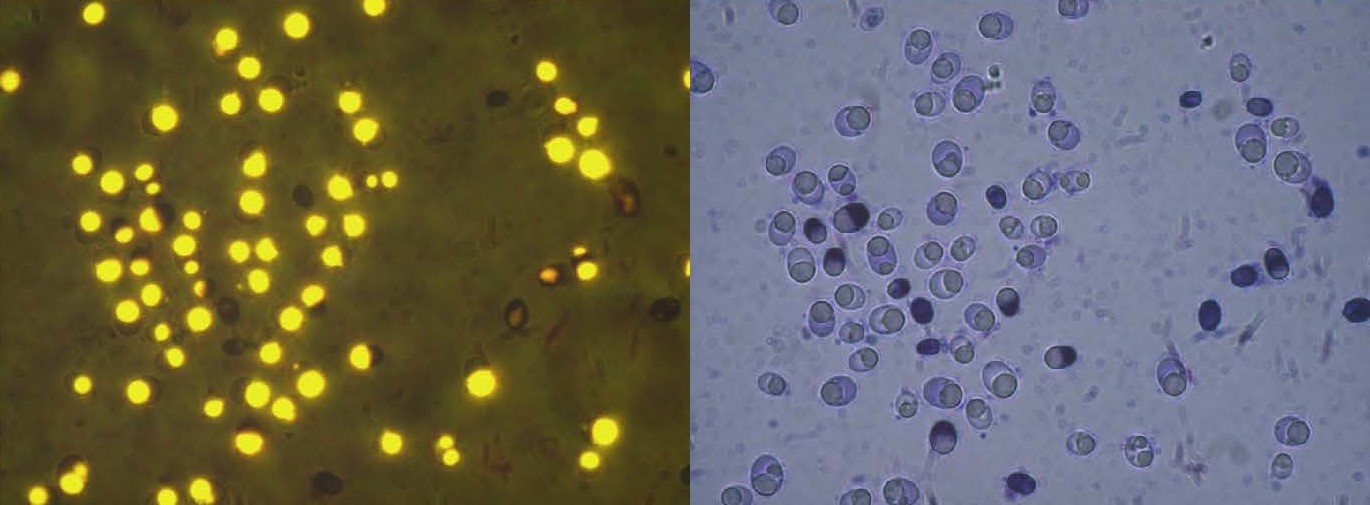
Protocols were established for the quantitative determination of total lipids in biomass obtained from Yarrowia lipolytica cultures under ALE conditions, as well as for the qualitative assessment of intracellular neutral lipid accumulation by epifluorescence microscopy. In addition, a method was developed for the determination of citric acid and glycerol in the culture medium.
Annotation of the reference genome of Y. lipolytica, as well as of a genome used in the literature for transcriptomic analysis of strain Y. lipolytica ACA-DC 50109, was performed in order to identify orthologous genes involved in lipogenesis. BLAST alignments were carried out to compare key coding sequences involved in this process, as well as to identify nucleotide sequences from Y. lipolytica strains available in the NCBI GenBank database, based on similarity to annotated and translated coding sequences. As a result of these analyses, a database comprising 534 nucleotide sequences associated with lipogenesis in Y. lipolytica was generated.
Alternative methods for selecting evolved clones obtained under cultivation conditions with 7% carbon source were tested, together with the optimization of their characterization protocols using biochemical and microscopic techniques, in order to improve the quality and reproducibility of the results.
The literature was analysed to establish an optimal workflow for high-quality DNA and RNA extraction suitable for Illumina and Nanopore sequencing platforms, as well as to identify the most commonly used software tools for raw sequencing data processing and hybrid assembly workflows.
Experimental data obtained from Yarrowia lipolytica cultures in the presence of 7% glycerol regarding lipid, protein, polysaccharide, and biomass content, as well as carbon source assimilation efficiency were correlated. In parallel, cultivation parameters influencing the ability of the oleaginous red yeast Rhodosporidium toruloides to simultaneously accumulate triacylglycerols and carotenoids were identified. Morphophysiological characterization of the parental strain Rhodosporidium toruloides NRRL-Y-27012 was performed with respect to osmotic and ionic stress tolerance, as well as the ability to assimilate different carbon sources. Methods for carotenoid quantification and chemical profiling compatible with intracellular lipid determination assays were also identified. Furthermore, the literature and specialized databases were reviewed regarding available genomic data for R. toruloides and best practices for sequencing data analysis.
For the genus Cunninghamella, studies were identified regarding the utilization of agro-industrial waste-derived carbon sources and the production of polyunsaturated fatty acids, as well as commonly used methods for nucleic acid isolation and purification from filamentous fungi, including both commercial kits and in-house protocols. Methodological benchmarks were established to address difficulties associated with processing filamentous fungal mycelial samples and applying epifluorescence microscopy staining techniques for lipid body visualization.
October – December 2024

The EvoSCO team was expanded through the recruitment of two PhD positions filled by Lecu Ana-Maria Alexandra and Georgescu Ana-Maria, as well as two part-time postdoctoral positions held by Dr. Avram Ionela and Dr. Irina Gheorghe-Barbu.
Ten evolved clones obtained through an Adaptive Laboratory Evolution (ALE) process, using glucose as carbon source and selected via cultivation on carbon-free medium, were long-term preserved at -80 °C. The evolved clones obtained in stage A1.1 were characterized using microscopic techniques, as well as chemical and biochemical analyses of biomass and culture medium. In addition, a workflow for genomic and transcriptomic sequencing data acquisition and processing was developed for the parental strain of Y. lipolytica.
A Nile Red fluorochrome staining protocol was adapted for the qualitative analysis of lipid accumulation in R. toruloides by epifluorescence microscopy, together with a method for lipid extraction and purification from this species under ALE cultivation conditions.
Furthermore, an experimental plan was established for determining the parameters required for the implementation of the ALE technique using the strain Cunninghamella echinulata CCF 2591 in the presence of substrates selected from the literature, as well as for validating methods for monitoring carbon source assimilation in ALE culture media.
January – March 2025
Equipment deliveries have commenced, and the laboratories have begun to take shape. Existing equipment was repositioned to make room for the new installations, and laboratory workflows were optimized in order to facilitate the activities of students and researchers and to improve accessibility to specific equipment.
Protocols for genomic DNA isolation from the parental strain Yarrowia lipolytica were tested, with particular attention paid to pre-treatment steps prior to cell lysis, in order to obtain higher-purity samples. A workflow was established for monitoring and conducting Adaptive Laboratory Evolution (ALE) cycles for Rhodosporidium toruloides, depending on the selected carbon source and applied selective pressure strategy. A method for the long-term preservation of evolved clones obtained within the ALE process was also defined, including populations characterized by an increased proportion of cells exhibiting poor sedimentation after centrifugation. ALE conditions were tested in accordance with the specific characteristics of the strain Cunninghamella echinulata CCF 2591, and optimal methods for selecting spores with high lipid content were determined. In parallel, preliminary cultivations of R. toruloides were initiated at laboratory bioreactor scale using defined carbon sources, in order to establish the biotic and abiotic parameters required for the transition from shake-flask batch cultures to controlled bioreactor systems. Preliminary selection and processing of agro-industrial residues with potential for efficient conversion into neutral intracellular lipids were also performed.
In parallel, progress reports were prepared for ongoing activities, alongside equipment reception, installation, staff training, and workspace reorganization.
A working visit by Prof. Dr. Georgios Angelis took place between 3-6 February, consisting of scientific discussions and analysis of experimental results. Additionally, three abstracts for poster presentations were submitted and accepted at international scientific conferences.
A strategy was established for identifying economic operators with relevant activity at national and European level, resulting in a preliminary list of potential collaborators from the fields of microbial biotechnology and agro-industrial residue production.
April – June 2025
During the ALE experiments applied to Yarrowia lipolytica, three evolved clones were isolated and long-term preserved at -80 °C, which, following characterization, demonstrated an increased lipid accumulation capacity. A preliminary determination of the lipid profile and cellular ultrastructure of the parental strain was performed using chromatographic analyses and transmission electron microscopy. Genomic DNA was extracted from samples of the parental strain Y. lipolytica ACA-DC 50109, followed by short-read sequencing using Illumina technology. The obtained data were assembled and analysed, and coding sequences were annotated using Gene Ontology-based databases (KEGG, EggNOG) in order to identify genes involved in lipogenesis, the Krebs cycle, and glycolysis. In parallel, several RNA extraction protocol variants were tested, and the optimal protocol was selected for subsequent analyses. In addition, genome annotation of the assembled Y. lipolytica ACA-DC 50109 strain was performed to identify relevant coding sequences.
The workflow for ALE experiments on Rhodosporidium toruloides was established and optimized by adjusting parameters according to the strain’s specific oleaginous phenotype. Populations of clones obtained after eight evolutionary cycles were characterized, and three evolved clones were selected and preserved at -80 °C through cultivation on carbon-free medium. These were subsequently characterized in terms of lipid accumulation phenotype and biochemical profile. Genomic DNA was extracted, sequenced, and assembled for the parental strain R. toruloides NRRL-Y-27012, and multiple RNA extraction protocols were also evaluated.
In parallel, ALE experiments were initiated and conducted on Cunninghamella echinulata, through the first three evolutionary cycles in two lineages differentiated by the C/N ratio. Experimental data regarding DNA and RNA extraction protocols tested on the parental strain C. echinulata CCF 2591 were obtained, and optimal methods for generating sequencing-grade nucleic acid samples were selected. Structural cellular changes in evolved clones preserved at −80 °C were analysed. In addition, Illumina sequencing of the parental C. echinulata strain was performed, followed by quality control and data assembly. Biomass accumulation capacity in the presence of alternative carbon sources derived from agro-industrial residues was evaluated, as well as the efficiency of their conversion into neutral intracellular lipids.
Progress reports were prepared for ongoing activities, alongside equipment reception, installation, and user training. The project results were presented at the ASM Microbes 2025 conference (Los Angeles, USA), as well as at the Student Scientific Communication Session of the University of Bucharest, by the involved PhD and MSc students. Finally, a detailed list of economic operators at national and European level was compiled, including information on their activity profile, website, and country of origin.